German Roach Treatment
No Spraying
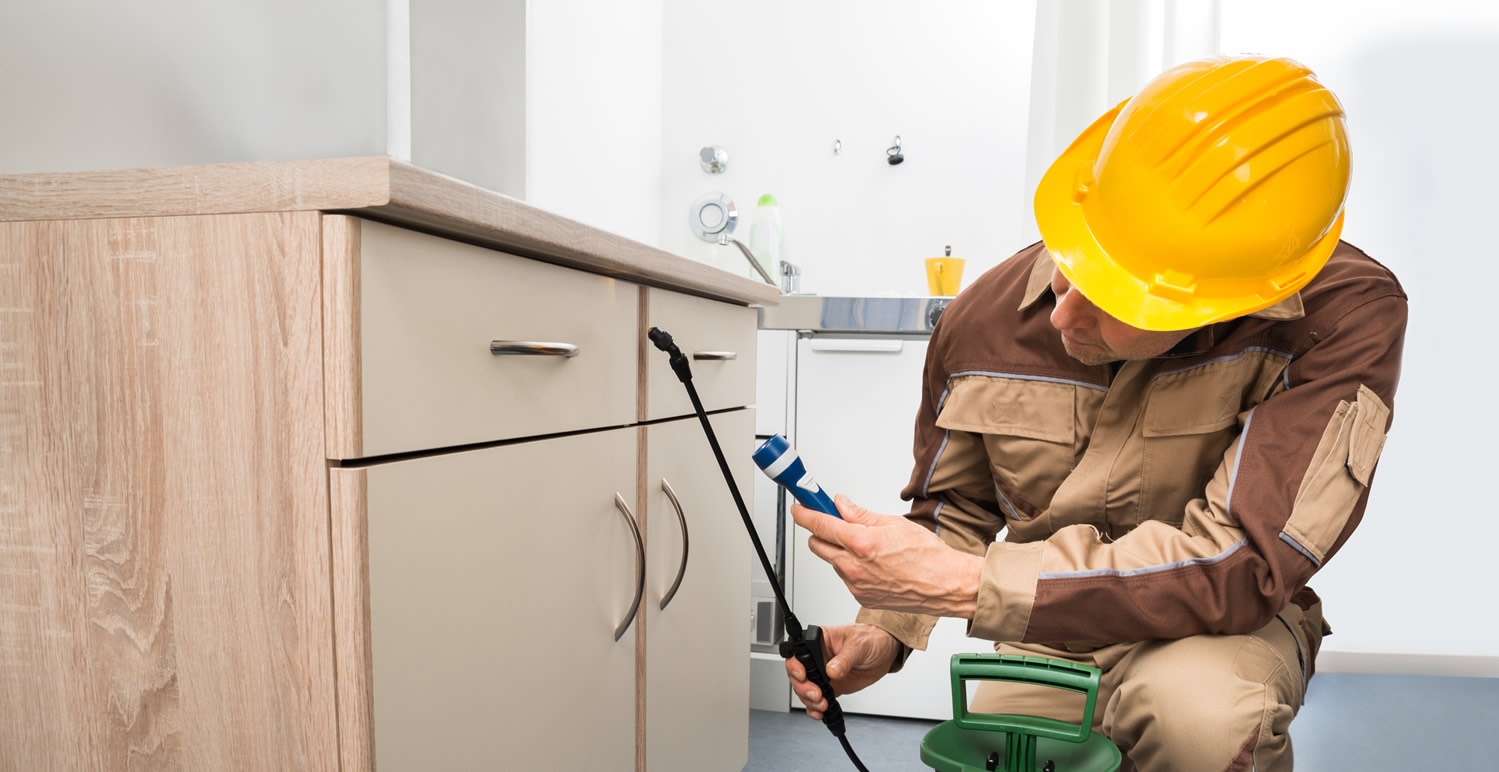
When A&E Pest Control comes to your home for a German Roach Treatment, you might be surprised a little. We do not carry a sprayer into your home, because we come in with a tool tote, containing Advance or Alpine Cockroach Bait, Gentrol Aerosol, Glue Boards and other control items you may not be used to. We have had a few people ask us where our sprayer is. Here at A&E Pest Control, we want to do a quality job, so we do not spray in the normal sense - running the cockroaches all over your home. If we ran cockroaches all over your home, you would end up with problem areas in places you had never had them before. We will also ask that you DO NOT Clean out you pantries and cabinets as you will move the same cockroaches to other areas, making control a bit more difficult.
We will treat the cockroaches in the same cracks and crevices that they live in. We will place glue board in areas we know cockroaches should be living in. When we leave, you will start noticing a difference (dead and dieing Cockroaches) in just a few days.
German Cockroaches live in cracks and crevices, places you normally would not look at. A&E Pest Control will begin your service with a thorough inspection, this lets us find the infestations and other hot spots before any treatments are started.
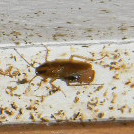
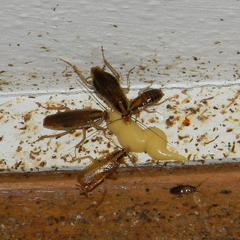
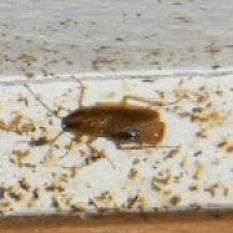
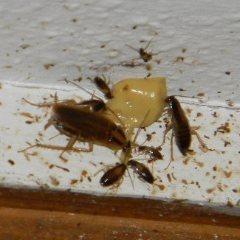
German Roaches eating Advance Gel Roach Bait. |
A & E Pest Control will use a flashlight, and other inspection equipment, open doors, look behind pictures, under tables, chairs and any other places the German Roaches may be.
After we apply our Advance Cockroach Gel Bait the cockroaches will begin feeding very quickly. With Advance Cockroach Gel Bait some of the studies show adult cockroaches start dying within 3 hours after consuming the bait. In this picture, the home was very heavily infested but, within 1 month of starting our service, we had a hard time finding a live roach.
Cockroach Facts:
- Are unable to survive in locations away from humans or human activity
- The major factor limiting German Cockroach survival appears to be cold temperatures
- Studies have shown that German roaches were unable to colonize inactive ships during cool temperatures and could not survive in homes without central heating in northern climates
- The availability of water, food, and harborage also govern the ability of German roaches to establish populations, and limit growth
-
 Is considered an aesthetic pest Is considered an aesthetic pest
-
The action threshold for this insect depends upon the tolerance of the people living in the infested dwelling
-
Most people associate roach infestations with poor sanitary conditions and typically go to excessive lengths to eradicate them from their houses
-
Actively growing field populations are comprised of 80 percent nymphs and 20 percent adults
-
Is omnivorous, eating table scraps, pet food, and even book bindings
-
The entire life cycle is completed in about 100 days. However, factors such as temperature, nutritional status, and strain differences may influence the time required to complete a life cycle
-
Breed continuously with many overlapping generations present at any one time.
|